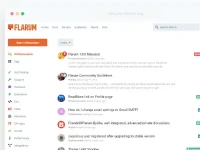
The two developers Toby Zerner and Franz Liedke have revisited the forum software by building Flarum. It's fast, open source and comes with a fresh design.
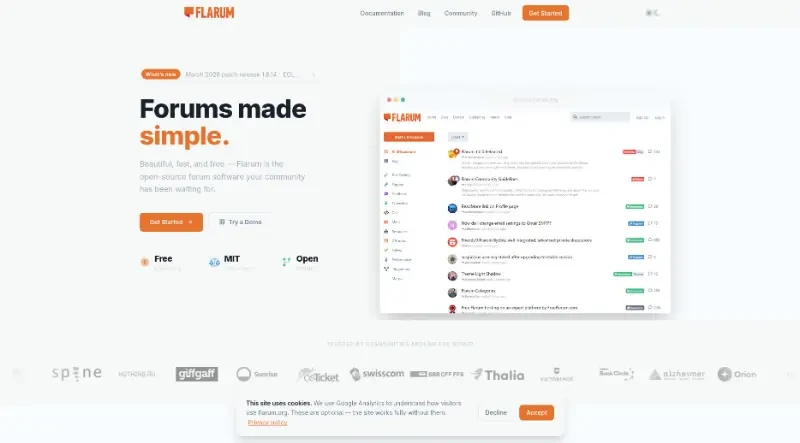
Flarum is a free, open-source forum software designed to be beautiful, fast, and easy to use, while remaining highly extensible for communities of any size.
The principal functionalities of this tool include:
1. Scalable Community Platform
Flexible Scaling: The software is designed to scale from small hobby communities to large enterprise forums.
Permissions and Moderation: Admins can assign permissions to groups, control member access across specific categories, and use built-in moderation and flagging tools to keep discussions organized.
Extensible Ecosystem: Flarum is built on a rich ecosystem of hundreds of extensions, allowing users to customize nearly every aspect of the platform or build their own using a powerful API.
2. Modern User Experience
Powerful Editor: Users can choose between a lightweight Markdown editor or a full WYSIWYG interface.
Engagement Tools: The platform supports in-browser notifications, email digests, and real-time updates via websocket extensions to keep members active.
Mobile and UI Polish: Recent updates include haptic feedback for mobile interactions, professional animations for post transitions, and a CloseWatcher API for better native gesture handling on mobile devices.
3. Performance and Modern Technology
High-Speed Architecture: Built on the Laravel framework, Flarum includes numerous under-the-hood optimizations such as cached notification counts, reduced database writes for authenticated requests, and asynchronous CSS loading to eliminate render-blocking.
Image Optimization: It automatically converts uploaded avatars and logos to WebP, a modern format that reduces file size by 30–50% without quality loss.
Modern Requirements: The upcoming Flarum 2.0 version utilizes Laravel 13 and requires PHP 8.3 or higher.
4. Security and Compliance
Secure by Default: The core software follows security best practices and receives regular updates to protect communities.
GDPR Compliance: It includes a dedicated extension for handling erasure requests, one-time confirmation links, and automated IP purging to meet data protection standards.
OAuth and Authentication: Recent improvements include a redirect-only OAuth flow for better security and a change to POST requests for logouts to prevent CSRF-based attacks.
You may also be interested in ...
Session

Braidchat