Is Flatpak the future of apps on Linux? Flatpak is a next-generation technology for building and distributing desktop applications on Linux
Flatpak is a modern utility for software deployment and package management that provides a universal format for distributing applications across the entire Linux desktop market.
The main features of this tool include:
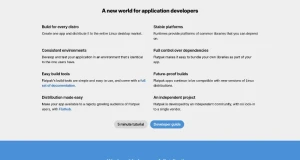
Universal Distribution: Developers can create a single application that runs on dozens of different Linux distributions, eliminating the need to build separate versions for each one.
Stable Runtimes: It utilizes "runtimes," which are platforms of common libraries that provide a stable and predictable environment for applications to depend on.
Total Dependency Control: Flatpak allows developers to bundle their own libraries directly as part of their app, ensuring it has everything it needs to run without interfering with the base operating system.
Consistent Environments: It ensures that the environment where an application is developed and tested is identical to the one the end-user sees, reducing "it works on my machine" bugs.
Future-Proof Compatibility: Applications built with Flatpak remain compatible with new versions of Linux distributions as they are released.
Independent Ecosystem: It is an independent community project with no lock-in to a single software vendor.
Flathub Integration: Users can easily browse and install a growing collection of apps from Flathub, a central distribution hub.
Preserves OS Stability: By running applications in a predictable, isolated environment with their own library stacks, it avoids compromising the stability and flexibility of the host system.

You may also be interested in ...

Shadows builder

Exciting new features in Vue 3