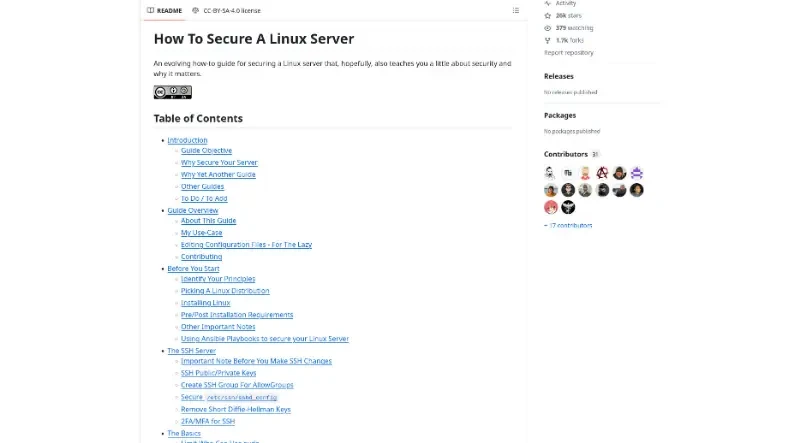
An evolving how-to guide for securing a Linux server that, hopefully, also teaches you a little about security and why it matters
How-To-Secure-A-Linux-Server is an evolving, community-driven resource hosted on GitHub that provides a practical, step-by-step guide for hardening Linux environments against security threats.
The principal functionalities and characteristics of this resource include:
1. Practical Hardening Guidance
Actionable Instructions: It is specifically structured as a "how-to guide," offering clear steps for securing a Linux server.
Comprehensive Scope: The repository addresses multiple facets of system security, categorized under topics such as linux-server, security-hardening, and server hardening.
2. Specialized Technical Modules
Component-Specific Security: The guide features dedicated documentation for specific infrastructure components, including Nginx configuration (
nginx.md).System-Level Hardening: It provides in-depth technical guides for Linux kernel sysctl hardening (
linux-kernel-sysctl-hardening.md), focusing on securing the operating system at its core.
3. Collaborative and Evolving Nature
Continuous Updates: The project is described as an "evolving" resource, ensuring that its recommendations stay relevant as new security best practices and threats emerge.
Significant Community Vetting: With over 26,000 stars and 1,700 forks, it is a highly trusted and widely used resource within the global SysAdmin and developer communities.
Active Maintenance: The repository tracks issues and pull requests, allowing for peer review and ongoing contributions from security experts.
4. Open Access and Licensing
Creative Commons License: The material is released under the CC-BY-SA-4.0 license, which encourages sharing and adaptation while ensuring proper attribution.
Transparent Development: As a public repository, all changes, history (over 260 commits), and discussions are visible to anyone seeking to learn about Linux security.

You may also be interested in ...

Linux Hardening Checklist

UnoCSS