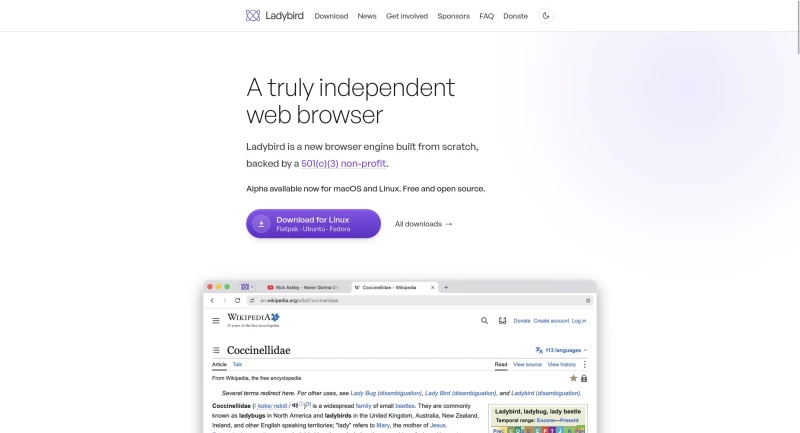
Ladybird is a new free and open source browser engine available now for macOS and Linux.
Ladybird is a new, independent web browser engine built entirely from scratch and backed by a 501(c)(3) non-profit organization.
Its principal functionalities and core technical features include:
1. Pure Independence & No Monetization
Engine Built from Scratch: It is a brand-new browser engine rather than a fork of Chromium, WebKit, or Gecko.
Zero User Monetization: The project operates without "default search engine deals," cryptocurrency tokens, or user tracking.
Conflict-Free Roadmap: It is funded by unrestricted donations and corporate sponsorships where sponsors hold no board seats or influence over technical decisions.
2. Core Engine & Technical Performance
Rust Transition: Originally written in C++, the project has adopted Rust as its successor language and is actively porting major subsystems (such as style and layout) to Rust.
JavaScript & WebAssembly Engines: It features a custom JavaScript JIT compiler, a new WebAssembly engine (with WebAssembly GC support), and dedicated JavaScript debugging tools.
Smooth Rendering & GPU Isolation: Includes an accelerated compositor, hardware video decoding, and CSS animations/hover effects that continue working smoothly even when the main JavaScript thread is busy.
Security Architecture: Implements process sandboxing, security hardening, and GPU isolation for enhanced stability and security.
3. Navigation & Developer Tools
Privacy & User Management: Provides private browsing, distinct user profiles, and session restoration.
Media & Web API Support: Supports WebAudio, geolocation APIs, download management, and media playback speed controls.
Developer Support: Includes built-in DevTools for inspecting storage and debugging JavaScript scripts.
4. Platform Availability
Desktop Alpha: Early Alpha builds are available for macOS and Linux.
Future Platforms: CI tests the JavaScript engine on Windows, with full Windows browser support and mobile ports (Android/iOS) planned for later stages.
You may also be interested in ...

AgnosticUI
Lodash