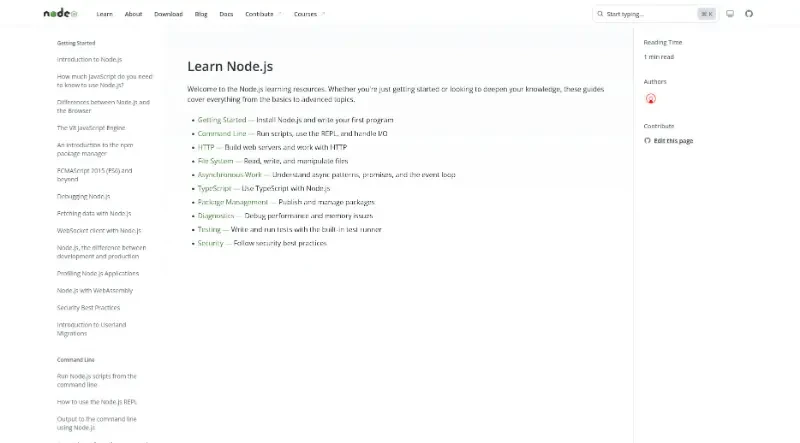
Want to learn NodeJS? NodeJS Dev is a good place to start. It presents an introduction to NodeJS with exemple code snippet and clear explanations.
Node.js is a powerful JavaScript runtime environment designed to build scalable network applications, offering a comprehensive set of resources for everything from basic scripting to advanced enterprise configurations.
The main features and learning paths for this tool include:
Asynchronous & Non-Blocking Architecture: It leverages the V8 JavaScript engine and a unique Event Loop to handle multiple operations simultaneously without blocking execution.
Comprehensive Command Line Tools: Users can run scripts, use the REPL (Read-Eval-Print Loop) for interactive coding, and manage environment variables or I/O directly from the terminal.
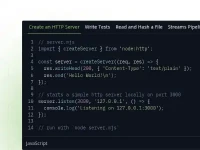
Robust HTTP & Networking: It provides the built-in capability to build web servers, handle complex HTTP transactions, and manage enterprise network configurations.
Direct File System Manipulation: Node.js allows for deep interaction with the OS, including reading and writing files, working with file descriptors, and managing folders across different filesystems.
Integrated Package Management: Through npm, users can easily integrate, manage, and publish packages to extend application functionality.
Native TypeScript Support: The platform offers dedicated workflows for running TypeScript code, whether through native execution, transpilation, or specialized runners.
Built-in Test Runner & Diagnostics: It includes a native test runner with mocking and code coverage capabilities, alongside advanced diagnostic tools like Flame Graphs for profiling performance and memory.
Security Best Practices: The resources provide specific guidance on securing applications and managing "Userland" migrations safely.
You may also be interested in ...

Frontend checklist
Amburgers