
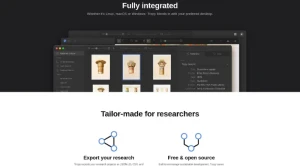
Explore your research photos.
Tropy is a free and open-source software designed specifically for researchers to manage, describe, and organize archival photos. It acts as a bridge between the raw data collection in an archive and the final writing process.
The principal functionalities of Tropy include:
Photo and Item Management
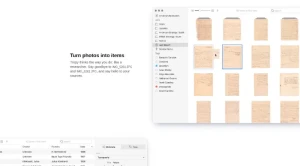
Logical Grouping: Tropy allows users to turn individual image files into "items," representing a single archival source (like a multi-page letter) rather than just a collection of disconnected JPEGs.
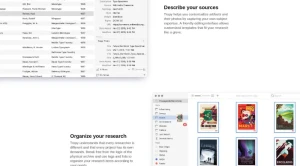
Contextual Description: Users can describe their sources using customizable templates to capture specific subject expertise and metadata.
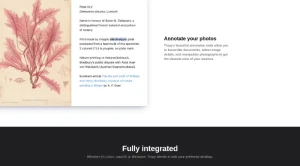
Annotation and Transcription: The tool includes features to transcribe documents directly, select specific image details for closer inspection, and manipulate photographs for better clarity.
Organization and Research Workflow
Flexible Categorization: Researchers can organize their items using tags and lists, allowing for a personalized structure that breaks free from the physical logic of the original archive.
Searchability: It is designed to help researchers spend less time "hunting" for specific photos and more time using them.
Sustainable Storage: Tropy saves research data using SQLite, a format recommended by the Library of Congress for long-term digital preservation.
Integration and Extensibility
Cross-Platform Support: The software is fully integrated with Linux, macOS, and Windows desktops.
Powerful Export Options: Research projects can be exported in various formats, including JSON-LD, CSV, and ZIP archives.
Core Plugins: Tropy features several extensions to connect with other research tools, such as:
Omeka S: For direct export of items to digital collections.
Zotero (CSL): To export Tropy items into citation management software.
IIIF: For importing IIIF manifests.
CSV: For importing and exporting data in spreadsheet formats.

You may also be interested in ...

Keyv
UIColors